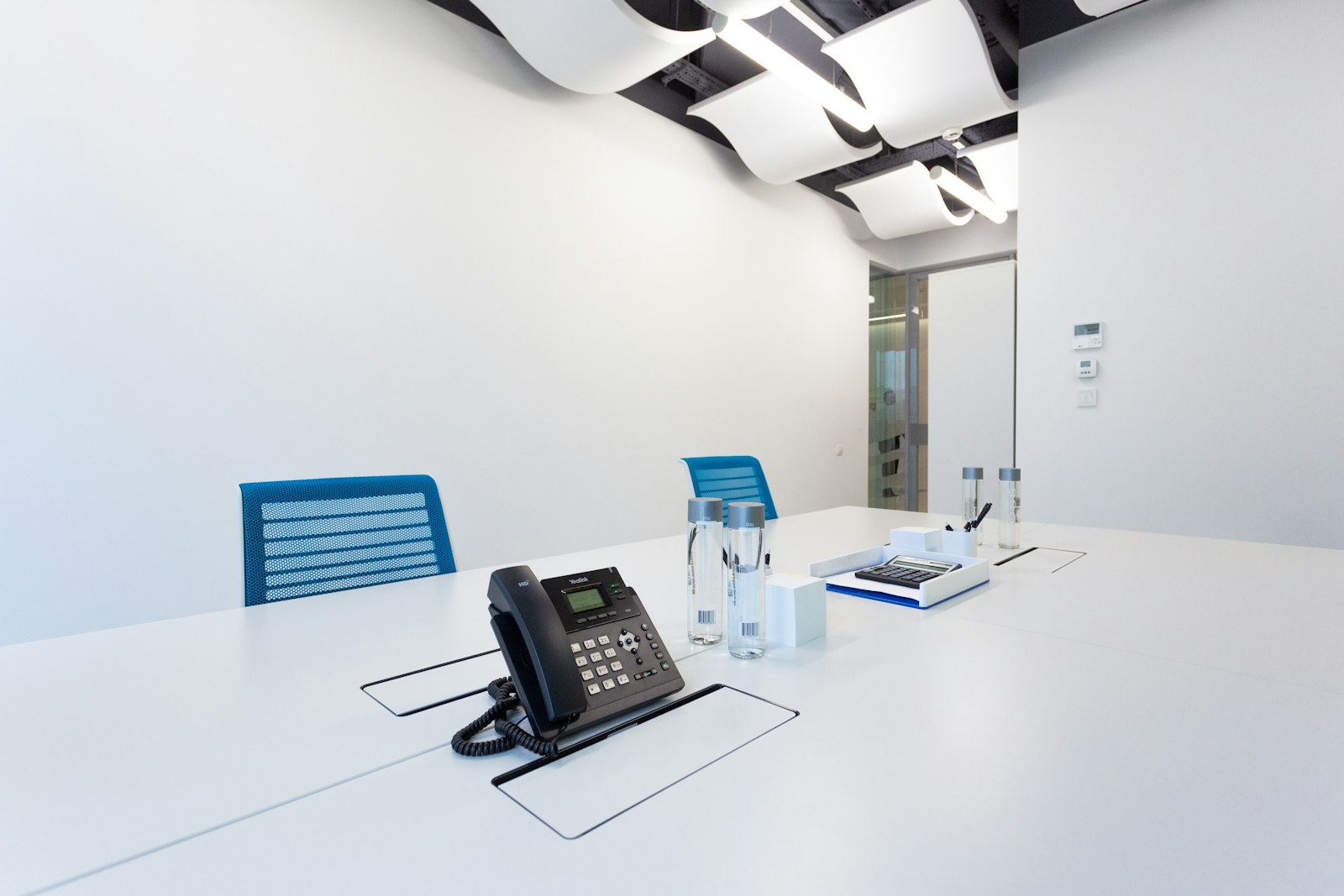

Picture the moment. It's 3pm on a Tuesday. Your phone system is down — incoming calls drop, the IVR is silent, customers are getting voicemails that go nowhere. You ring your provider's support line. You get a hold queue. Then a person with an accent you can't quite place. Then a script. Then a ticket number. Then a promise that someone will get back to you within the next business day, which, given the time difference, means about 18 hours from now.
And you remember — too late — that this is the part of the deal you weren't paying attention to when the sales call sold you on the package, the brand and the savings.
The bigger and busier your business, the more critical that system is. And the moment it depends on a provider who isn't really here — not in your country, not in your time zone, not in your market — you've made a decision that will eventually cost you more than the saving that justified it.
Why international telephony providers look so attractive at the demo
Let's be fair: there are reasons South African businesses sign up with international names. The pitch is good, the brands are recognisable, and the headline numbers usually beat the local quotes on a per-seat basis. Four things in particular make the international option look like the obvious choice.
1. Brand recognition does some of the selling for them
When the procurement spreadsheet has "global platform with 600,000 customers worldwide" on one line and a SA company you'd only vaguely heard of on the other, the spreadsheet feels almost self-deciding. The decision-maker takes the safer-feeling option and assumes that scale equals reliability. Sometimes that's right. Often it isn't — but you can't tell from the spreadsheet.
2. Marketing budgets that swamp anything a local provider can match
International players spend more on a single SA-targeted ad campaign than most SA telephony companies spend on marketing in a year. That doesn't mean the product is better. It means you've been carpet-bombed with their messaging and gently nudged with the messaging of everyone else. The result is what salespeople call "mind-share" and what marketing-fatigued buyers call "the name I keep seeing".
3. Pricing that looks cheaper on a clean spreadsheet
Per-seat pricing converted from US dollars usually wins the line-by-line comparison. "$45 per user per month" looks tighter than "R895 per user per month" until you remember to multiply by 18, add cross-border processing fees, and pay attention to the platform-licence-on-top-of-that surcharges that don't always show up in the headline. By the time the second invoice arrives, the maths is less flattering.
4. The "save 40%" framing
Every international platform's website opens with a savings claim. 30%, 40%, sometimes 70% versus your current setup. Those numbers are technically defensible — they compare against a specific reference deployment of legacy copper PBX with a specific call profile, and your business is probably not that reference deployment. But the claim sits in the mind. It frames the conversation. And it makes the decision feel like a no-brainer right up until something breaks.
What the demo doesn't tell you
Sales demos are designed to show you the platform working. They're not designed to show you what happens when it isn't. And the gap between those two states — the platform-working state and the platform-broken state — is where the case for local telephony lives.
Time zones don't sleep when your phones do
South Africa runs on SAST. The big international platforms run their primary support out of the US Pacific time zone, India, the Philippines, or somewhere with an even bigger time gap. The result is structural: when your business is awake, theirs is either asleep, just waking up, or about to clock off.
Some providers paper over this with a "24/7 global support" line. In practice, that usually means first-line support is available globally — i.e. a script-reading agent who logs the ticket and escalates it to the team that can actually fix the problem, which is the team in another time zone. So your real time-to-resolution is the sum of two queue times plus the time zone gap, not the response time on the SLA.
For a phone system, that gap is measured in lost calls. For a sales-led business, lost calls are lost revenue. The maths gets uncomfortable quickly.
Local support is a structural choice, not a marketing claim
Every international platform's South African landing page mentions "local support". Read closely. Almost always, what they mean is "we have a partner in South Africa" — what the industry calls reseller-dependent support. That partner may be excellent. They may also be a small reseller with three engineers and a tight backlog. You won't find out which until something breaks. And when it does, you'll discover that the partner's escalation path goes back to the international platform vendor — who is, of course, in a different time zone, with a different priority list, and with no commercial relationship with you directly.
Real local support is structural. It means the people on the support line are employed by the provider, not by an arm's-length partner. It means the engineers working on your platform are sitting in the same country, working SA business hours, accountable to the same management team that signed your contract. That's a different thing entirely, and it's not something a vendor can fake with a regional landing page.
Knowing the South African market is not optional
POPIA matters. ICASA licensing matters. The Electronic Communications Act matters. The Telkom copper decommissioning timeline matters. Load-shedding readiness — quieter in 2026 but flagged as a risk again from 2029 by Eskom's own outlook — matters. The way SA businesses think about call recording, the dominance of WhatsApp Business as a channel, the SA SME working-from-home patterns — all of these matter. They're not marketing fluff; they're the operating context in which your phone system actually runs.
An international provider can read about all of this. They can put it in a brochure. But there's a real difference between knowing about a market and knowing a market. A SA-headquartered provider has lived through the load-shedding years, watched POPIA become enforceable, seen the copper-to-IP migration play out across customer after customer. That kind of context isn't replicated by a competent overseas team reading the country-brief at the start of a deal.
Lock-in contracts are easier to enter than to leave
International providers default to longer-term contracts than local SA providers — 24 months, 36 months, sometimes longer. That's a calibrated choice: it amortises the cost of acquiring the customer, secures revenue against the platform-investment cost, and reduces the pressure to keep delivering once the deal is signed.
It also means that if support is bad and you want to leave, you can't. Not without paying out the contract, not without re-running a procurement cycle, not without explaining to leadership why the system you championed has to be replaced 14 months in. So you stay. The provider knows you'll stay. And the service quality calibrates accordingly. And the lock-in isn't only in the contract length. Some international platforms also use per-system licence economics — you pay for a fixed pool of simultaneous-call capacity, then discover that extension caps per simultaneous-call licence mean you can't add seats as the business grows without an expensive licence upgrade. The upgrade conversation usually happens on the vendor's timeline, not yours.
Phone lines are the lifelines of any successful business
This is the line we use internally, and it bears repeating because the implications of it tend to get lost in the procurement spreadsheet. Take an hour and put a number on what every hour of phone downtime costs your business. Lost sales calls. Delayed customer-service tickets. The trickle of customer trust that erodes when you can't be reached. Add the soft cost of staff who can't do their jobs because the system is silent. Multiply by the realistic number of outages and slow-response support tickets you'd hit in a year on an international platform with substandard local cover.
Now compare that number to the "savings" the international platform's sales deck promised you.
Two things tend to happen when buyers actually do this exercise. The first is they realise that telephony savings, calculated honestly, are usually a smaller line item than they thought. The second is they realise that operational risk — measured in downtime, lost calls and slow-resolution support — is a much bigger line item than they thought. Once both numbers are in front of you, the international platform's spreadsheet advantage gets thinner. Sometimes it inverts entirely.
You are not buying telephony. You are buying business continuity dressed up as telephony. The vendor whose support team is in the wrong time zone is not selling you the same product as the vendor whose support team is two suburbs away. The brochures look identical. The lived experience is not.
What a properly local SA telephony provider actually delivers
A SA-built, SA-supported telephony platform isn't a smaller version of an international platform. It's a different product calibrated for a different market. Six things that should be true of any provider that genuinely belongs in this category.
Built for the South African market — not adapted to it
There's a meaningful difference between a platform engineered from the ground up for the SA market and one that's been retrofitted to serve it. The SA-built platform is calibrated for the connectivity profile most SA businesses actually have, the call patterns most SA companies actually run, the regulatory environment most SA decision-makers actually have to defend at audit. The retrofitted platform does most of these things — but each one comes with edge cases the original engineers never had to handle.
When you choose local, you're choosing the platform that didn't have to be ported here. It was written here.
A self-service platform that empowers the manager
A good telephony platform is one you don't need to call support to use. That sounds backwards — surely good support is the headline? — but the point is that a system designed properly puts day-to-day control in the hands of the business owner or operations manager. Adding extensions, removing extensions, adjusting routing rules, changing IVR menus, configuring hunt groups, setting up after-hours rules, tweaking call recording policies: these should be things you do yourself, in your own time, from a web admin console.
This is what we built our Telephone Management System — the TMS — to do. It's the operational backbone of the platform: the layer that lets a manager scale extensions up when the team grows, scale them down if the business has to retrench, and adjust the routing rules without filing a ticket. Self-service isn't an excuse for the provider not to support you — it's a sign that the platform respects your time enough to put the controls where they belong.
Real-time analytics as a business insight tool
Every call your business makes and receives is data. Who's calling. When they're calling. How long they wait. How calls are handled. Where bottlenecks are. Where missed calls are clustering. Where your inbound volume spikes by day-of-week or hour-of-day. A properly-built telephony platform turns this data into real-time dashboards and historical reports that aren't just a phone log — they're a window into how your business operates.
For a sales-led business, this is leading-indicator data on revenue. For a support function, this is where service-level shortfalls show up before customers complain. For a contact centre, this is the operational instrument panel. The right local provider doesn't just give you a phone system. It gives you the data feedback loop that lets you run the business more deliberately.
A team that picks up the phone — and resolves the issue
The bar isn't "24/7 support" on a marketing page. The bar is: when something is broken and you ring the support line, does a human in South Africa pick up, can they understand the problem in plain English (or Afrikaans, or isiZulu), can they fix it, and will they stay with you until it's actually resolved?
Our managing director, Warren Hawkins, puts it directly: “We don't lock anyone into long-term agreements, and the discipline that gives us is real. It means we have to delight customers from the day they sign up — and keep delighting them every month, for years. If we ever stop earning the relationship, our customers can leave. So we don't stop earning it. That's the obligation we wanted to give ourselves, and it shapes every decision the team makes — particularly how we run support.”
Our operations director, Leonie Stanley, frames it from the operations chair: “Support isn't a marketing layer at Euphoria — it's the heartbeat of how we run. The goal is a platform good enough that customers don't need to call us. But the day they do, the team picks up, the team listens properly, and the team stays with the problem until it's actually resolved. That isn't a service-level promise we wave at a contract — it's how we judge whether we're doing our jobs.”
Locally-supported telephony means the person picking up the phone has been on this platform for years. They know the integrations, they know the common faults, they know the SA carrier landscape, they know what to ask first. That's not a marketing claim — it's a structural property of the team. The international platform with a partner network can't replicate it, no matter what the SLA promises.
A platform that scales up and down with your business
Business growth isn't linear. Teams expand. Teams restructure. Sometimes — for hard but real reasons — teams contract. A telephony platform that locks you into a fixed number of extensions, or makes scale-down operationally painful, is a platform that's wrong-fit for an SA SME or growing business. The right system lets you add extensions in minutes when you hire, and remove them just as easily if the business needs to flex the other way.
That flexibility matters more in the SA market than in larger, more stable economies. SA businesses navigate genuine cycles — currency volatility, regulatory change, sector-specific shocks. Your phone system shouldn't add a fixed cost to those cycles. It should adapt to them.
Work-from-anywhere built in, not bolted on
Hybrid work in South Africa isn't universal — recent labour data suggests roughly 3.6%–3.7% of SA vacancies are remote or hybrid, with the majority of those in IT and knowledge work — but for the businesses where it matters, it matters a lot. A properly-built modern telephony platform supports work-from-anywhere by default: browser softphone, desktop app, mobile app, all sharing the same extension, all routing through the same admin rules. No bolted-on remote module, no separate licence to add.
For SA businesses navigating power-grid uncertainty, mobile-data failover and distributed sales teams, this isn't a luxury. It's the table stakes for telephony you can actually rely on.
Or, as our CTO Nic Laschinger puts it: “A great telephony platform puts the manager in control and frees the business to do what it's paid to do — serve its customers properly. Every conversation, every queue, every campaign generates detail that feeds back into better decisions. The features matter, but the point of the platform is simpler than the feature list suggests: empower the team to deliver service that customers actually remember.”
Where Euphoria sits in all of this
We're a South African telephony company. Founded in Cape Town in 2010, we've spent fifteen years building and refining a locally engineered cloud PBX and contact centre platform for SA businesses. 6,000+ companies run on it today, from one-person operations to 1,000+ extension multi-site rollouts. The platform is built here, supported here, and priced in Rands without games — R65 per extension per month on Express, all published, all month-to-month, no contracts.
We're on this list of "things to look for" because it's the list we built our company around — not because we're shopping the same brochure as anyone else. The TMS exists because we believed business owners deserve to control their own phone system. The local support team exists because we don't trust outsourced support to deliver what our customers need. The published pricing exists because we believe procurement decisions are easier when nobody's hiding the number. The month-to-month model exists because we'd rather earn the relationship every month than lock you into something you regret in six.
We're not the right provider for every SA business — there are categories of buyer (the largest carrier-grade enterprise contact-centre operations, the businesses that genuinely need to bundle voice with global MPLS) where another provider will fit better, and we say so in our companion comparison pieces on the best cloud PBX providers, the best VoIP service providers, and the best contact centre software providers operating in South Africa. But for South African SMEs, growing businesses, mid-market companies and the SA-focused contact centres that make up most of the market, we think the local option is the better option — and we've spent fifteen years building the proof.
How to evaluate whether you need local South African telephony support
Five questions to ask any telephony provider before you sign. The answers tell you, very quickly, what kind of provider you're actually dealing with.
1. Where is your support team physically based?
If the answer involves the words "partner network", "global support hub", or "24/7 follow-the-sun coverage", you're not getting local support — you're getting routed-to-local-where-possible. Ask for a physical office address. Ask how many engineers are based there. Ask if you can visit them. The answer to that last question is genuinely diagnostic.
2. What hours is support available, and in which time zone?
South African business hours are roughly 08:00 to 17:00 SAST. A provider whose support is genuinely available in your time zone for that whole window is a provider you can rely on. A provider whose support "starts at 15:00 SAST because that's 08:00 US Pacific" is a provider whose support doesn't really exist for your business — at least not during the hours you most need it.
3. Who will I actually speak to when something breaks at 4pm on a Friday?
First-line script readers? Ticket queues that loop back to email? A chatbot that opens a case for callback during the next business day? Or a human engineer in the same city as you who can take ownership of the problem and resolve it before the weekend? Push past the marketing answer to get to the operational one.
4. Do you understand the South African regulatory landscape?
POPIA. ICASA. The Electronic Communications Act. The Telkom copper migration timeline. Load-shedding readiness. The dominance of WhatsApp Business as a customer channel. These aren't optional context — they shape how a SA telephony platform should actually work. A provider that doesn't know them is a provider whose decisions have been calibrated for a different market. Test the depth of the answer.
5. What's the realistic time to resolution on a typical issue?
Not the SLA — the actual lived experience. Ask for examples. Ask for references. Ask to speak to existing SA customers about specific incidents they've had and how they were resolved. The number you want is in hours, not days, and you want to see it in writing or hear it from someone who's actually lived it.
What if you've already signed with an international provider?
If you're reading this from inside an existing international-platform contract that isn't going well, the news is better than your vendor probably suggests. The exit is more available than the lock-in language implies — and the migration is well-trodden ground. Five practical things to know.
Your numbers come with you. Number portability between licensed South African operators is well-established — over three million geographic numbers and thirteen million mobile numbers have been ported through the Number Portability Company since the schemes went live. The provider you're with doesn't own your numbers. You do. Most porting completes in two to three weeks, paperwork handled by your new provider.
Read the contract exit clause specifically. Long-term contracts vary widely on what "leaving" actually costs. Some have notice periods of 30 days, some 90, some require full pay-out of remaining months. Some include reconnection fees, equipment-return charges, or platform-deprovisioning costs that aren't visible in the main commercial summary. Get the real number in writing before you negotiate. You'd be surprised how often it's lower than the marketing suggests.
The migration runs in parallel — don't cut over cold. Successful contact-centre and PBX migrations in South Africa share a common playbook: run both platforms in parallel for four to eight weeks, cut over by queue or business unit rather than all-at-once, port numbers in batches, keep the old system live until the new one has completed at least one full reporting cycle. The disruption is real but bounded — usually one or two weeks of agent retraining, not months of business chaos.
A serious local provider carries most of the migration weight. The pattern that works: the new provider handles porting paperwork, number-routing configuration, IVR-rule transfer, integration re-wiring, and parallel-run validation. You handle the change-management and agent training. The migration is the new provider's chance to earn the relationship — and any provider serious about winning your business will treat it that way.
Sunk cost is the wrong frame. The eighteen months you've already paid on the international contract is gone whether you stay or leave. The decision is about the next eighteen months. A platform that's failing you now will keep failing you — the support situation isn't going to improve because you wait it out. Walking away from an underperforming contract feels expensive in the moment. Staying for another twenty-four months because you've already paid for eighteen is, on the maths, almost always more expensive.
The exit is harder to start than to finish. Most of the businesses that decide to switch tell us afterwards that the actual mechanics took less time and caused less disruption than they'd feared. The hardest step was the decision.
Frequently asked questions
The questions South African businesses ask us most when weighing local vs international telephony.
Is local SA telephony support really that different from international support?
Structurally, yes. A SA-based provider's support team works your business hours, speaks your language fluently, knows the SA regulatory and infrastructure context, and is accountable to the same management team that sold you the platform. An international provider's "local support" usually routes through a partner network — competent partners exist, but the chain of accountability runs back to a head office in a different time zone, with a different priority list, and with no commercial relationship with you directly. The difference shows up the moment something breaks.
Aren't international platforms cheaper per seat?
Often the headline number is, yes — but that's not the whole cost. USD pricing converted to ZAR fluctuates with the currency, cross-border payment fees add a layer, and the platform-licence costs sometimes sit on top of the per-seat number. More importantly, the lived cost includes downtime: every hour your phones aren't working, you're paying in lost calls, lost revenue and lost trust. Once you put a realistic number on that risk, the international platform's price advantage usually thins out, and sometimes inverts.
Don't international platforms have more features?
Sometimes. The largest enterprise platforms (NICE CXone, Genesys Cloud CX, Cisco Webex Contact Center) genuinely have more feature surface area at the top end — speech analytics depth, advanced workforce management, sophisticated outbound campaign tooling. For Tier-1 enterprise contact centres with the procurement processes and integration teams to make those features pay back, they're often the right pick. For SA SMEs, growing businesses and mid-market organisations, the feature gap rarely justifies the cost-and-support trade-off.
What about a hybrid approach — international platform with a local SA partner?
This works when the partner is genuinely strong, properly resourced, and incentivised by the contract structure to look after you. It doesn't work when the partner is a small reseller with a tight backlog, an arms-length relationship with the vendor, and no ability to escalate effectively. The way to tell which one you're getting is to ask the partner directly: how many engineers do you employ, how many customers do you serve, what's your average time-to-resolution? Their answer (or unwillingness to give one) tells you everything.
How do I check whether a provider is genuinely SA-based?
Three checks. First: does their ICASA licence (or partner ICASA arrangement) appear on their site? Second: where is their physical office, and how many people work there? Third: do they have SA-named customers willing to speak to you about their actual support experience? A genuine SA provider passes all three checks without needing a marketing answer.
We're a smaller business — do we really need local support?
Smaller businesses need local support more, not less. A 200-agent enterprise can afford a TAM (technical account manager) on its international platform's contract; a 20-person SA business can't. So when something breaks, the 200-agent enterprise has a named human to call. The 20-person business goes to the general support queue — and where that queue lands geographically becomes the difference between an outage that lasts an hour and one that lasts a day.
What about cost-savings claims like 'save 40%'?
Treat them carefully. The 40% figure is usually true against a specific reference deployment (often legacy copper PBX with a particular call profile) and not against your actual setup. Ask any provider to run the savings calculation against your own current bill, with your own call volumes, and to break out which costs are guaranteed vs which are usage-dependent. If they can't or won't, the headline number is a marketing claim, not a quote.
What questions should I ask before signing any telephony contract?
The five we listed above: where is the support team based, what are their hours and time zone, who picks up when something breaks at 4pm on a Friday, what's their SA regulatory knowledge, and what's the realistic time-to-resolution. Add two more: what does the contract exit look like (notice period, fees, equipment return), and what specifically does the SLA promise — and what's the credit if it's missed.
Does month-to-month telephony cost more than a long contract?
Sometimes the per-seat number is marginally higher on a true month-to-month deal — but the optionality is worth the difference. A provider confident enough in their service to operate without long-term lock-in is a provider with a structural incentive to keep delivering. Lock-in contracts protect the provider, not the customer.
How does load-shedding affect VoIP and cloud telephony in 2026?
Less than it did in 2023 — Eskom recorded more than 240 consecutive days of uninterrupted power supply by late 2025. But Eskom's own Medium-Term System Adequacy Outlook 2026–2030 flags 2029 and 2030 as high-risk years. So load-shedding resilience is no longer the urgent headline it was, but the failover plan — mobile-app routing, cellular data backup, on-premise UPS — is still worth having. A SA-based provider knows this and has built the answer into the platform. An international provider has to ask what load-shedding is.
What is reseller-dependent support, and how do I tell if a provider has it?
Reseller-dependent support means the people answering your support tickets aren't employed by the platform vendor — they're employed by a third-party reseller or partner who has a separate commercial relationship with the vendor. The partner may be excellent. They may also be small, under-resourced, or working with a long escalation queue to the actual vendor. To check: ask the provider directly who employs the engineers who'll work on your platform, what physical address they sit at, and what the escalation path back to the vendor looks like when something needs deep platform fixing. A vendor whose answer involves the phrase 'our partner network' is a vendor whose support is reseller-dependent.
What are per-system licence economics, and should I worry about them?
Per-system licence pricing means you buy a fixed pool of simultaneous-call capacity rather than paying per user. It can look cheaper on day one if your headcount is small, but the model creates two structural risks. First, when your team grows, you may discover you've exhausted the licence's extension cap per simultaneous-call ratio and need an expensive upgrade. Second, the licence renewal conversation happens on the vendor's timeline, not yours — which limits your negotiating position. Per-user subscription models are typically more predictable for businesses planning to grow.
How do I evaluate a VoIP provider's actual time-to-resolution?
Don't rely on the SLA — SLAs are aspirational, not descriptive. Ask the provider for three things instead. First, references: existing customers willing to talk about specific incidents they've had and how they were resolved. Second, examples: what did the last three major support tickets look like, from log to close? Third, a phone test: call the support line during the sales cycle and time how long it takes to reach a human engineer who can answer a technical question. The number you want is in hours, not days, and you want it from lived experience — not a marketing page.
What does 'extension caps per simultaneous-call licence' mean in practice?
Some platforms tier their licences not by number of users but by a ratio of extensions to simultaneous-call (SC) capacity. For example, a smaller licence might cap at five extensions per SC; a larger one at eight. If your business has 50 staff but typically only 12 are on calls at peak, you might be on a 12-SC licence — but the 5:1 ratio caps your total extensions at 60. Hire one more salesperson and you're either paying for a licence tier you don't really need, or quietly running over the ratio and risking a vendor audit. The practical implication: if you're shopping a platform that uses this model, calculate the ratio against your business growth plan, not your current state.
The bottom line
The brand on the box matters less than the team that picks up the phone when you call. The savings claim matters less than what an hour of downtime costs your business. The marketing budget that got your attention matters less than the lived experience of the next twenty-four months.
Local matters. Not because international is automatically bad — there are categories of buyer where an international platform genuinely fits best, and there are SA partners doing excellent work on top of international platforms. But for the majority of South African businesses making telephony decisions in 2026, the local option is the better one — and that's a structural property of the market, not a brand argument.
If you'd like to see what locally-built, locally-supported, transparently-priced telephony looks like in practice, see our published pricing or get a quote tailored to your team.

About the author
Euphoria Telecom
The Euphoria Team
Got a communications challenge of your own? Chat to a Euphoria specialist — or see our product in action.